
The Boy From Christian Hill
They never had to tell you no. They just build the thing so your foot can’t reach it. The algorithm don’t even do that. It stand in front of you and point, and you walk, and you call it your own two feet.

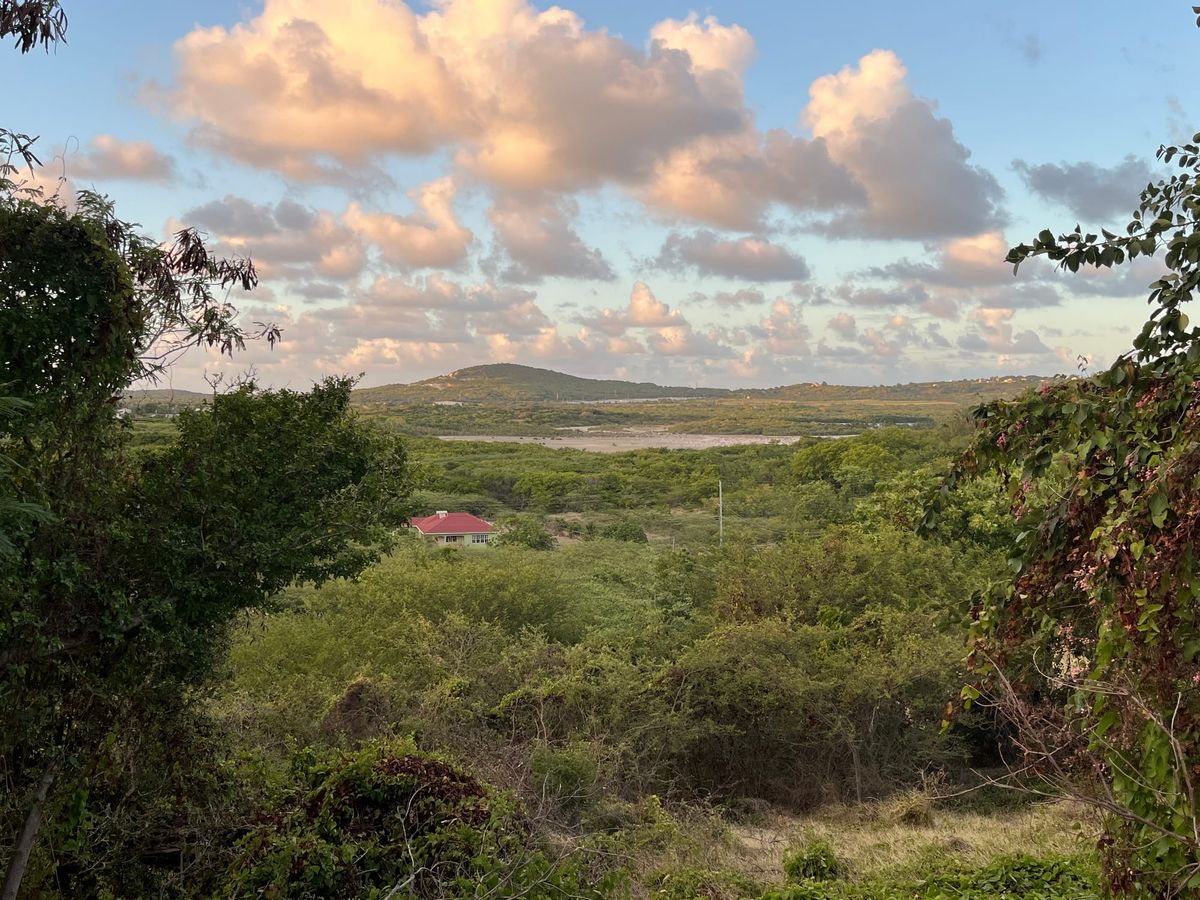
The island is remote.
A high pitch chirp. Those tiny tropical frogs. Not croaked. Anybody who has slept one night on that hill knows the difference. Foreigners cannot sleep in this din.
Its inhabitants have adapted poorly to change.
Out at the bend the tree let go all at once, a hundred dried pods rattling together in the wind like an orchestra tuning, and the voice had to wait for it to finish. it is soothing to the soul.
He-haw, he-haw! A donkey brayed, close, enormous, for no reason.
Its inhabitants, the voice began again, have adapted poorly to change.
Far off, under everything, the sea went on breaking against the reef on a quiet, warm night.
Nehemiah Joseph was lying flat on his back on top of the cistern, where he had slept or not slept most nights of his life. It was not his bed, but it was cool and the brisk breeze made him sleep.
His great-grandmother built that cistern with a local mason she argued with for a month. He cut railroad track from the abandoned cane transport line as cross beams. It held the roof water. It held the family through three dry seasons. It was also, if you lay on it after the stone gave back the day's heat, the best place on that side of the island to watch the sky do its work.
The clouds came over in shapes. A hand. A small dog chasing a giant sheep. A man carrying something heavy, like a tree. If you watched long enough you stopped being able to say where the sleeping started.
The subject is advised to secure his dwelling.
The door had no lock. It had never had a lock. The key went missing before he was born and nobody since had thought it worth the trouble. Besides, the only element worth keeping out then was a storm, and the resulting tarantulas escaping their holes for dry space. For those moment, a simple inside cross-bar on the outside shutters did the trick.
From the hill you saw both sides at once, which is why his great-grandfather built up there.
One side: houses close together, zinc roofs and yards and lines of weekly washing and everybody's business visible from everybody's gallery. The other side: green going down and down to Willoughby Bay, pasture, bush, the wild trees the goats debarked like a precision machine, mango trees nobody planted loaded with colorful fruits and everybody gets their sugar-high from.
Thirty-one red-clay pots of flowers stood along the gallery rail. Some along the steps. Most on a wall built for the plants. Hibiscus, crotons, roses, things carried over in a biscuit, milk or juice tin as cuttings a long time ago and still going. Nobody but Granny touched them with her magical green fingers.
A hermit crab came across the road wearing the casing of a dead telephone.
Nobody saw it. It had been doing that for years.
By seven he had the fire going and the goat water on.
His hands did it without him. The meat first, taking its time. Thyme. Then the whole scotch bonnet, whole peppers, parsley, bunches of it.
You never chop a scotch bonnet. Chop it and you let the seeds out, and the seeds are where the hell is, and then the pot is fighting the people eating from it. Whole, it gives up everything you want from it and keeps the fight to itself. Any child on that hill could tell you this. It is not a secret and it is not written down anywhere either. A hot experience is the teacher.
Breadfruit went in. Sweet potato. The bread was already baked, dark-crusted, cassava flour, because cassava is what grows now and wheat is a thing in stories, like snow. Bambulla is the name of a version without leaven.
The smell came up off that pot and went down the hill and stopped Mr Lawrence halfway, as it had on many occasions, and he was in the yard by five past, pretending to look at something.
Miss Carmen was served first because she came first and because she was eighty-nine.
Then Nehemiah stood back and watched her mouth.
Nobody in Christian Hill remarked on this any more, the way you stop hearing the sea.
He could smell that pot from the bottom of the yard. Every layer of it. The thyme, the fat, the pepper, the wood smoke, the particular sweetness coming off the breadfruit. He smelled it better than anybody on that hill and he always had.
What he could not do was taste it.
Ten years now. The smell arrived whole and the taste arrived almost not at all, and he had learned to cook in the gap between the two by reading the faces of people eating. Some bitter still reached him, far back, if a thing was bitter enough. And underneath everything, always, a thin taste of metal that had never gone anywhere.
Miss Carmen's left eye tightened a fraction on the first spoonful.
Salt, he thought.
Salt was the one he could never find on his own. Salt was the one that left.
Tomorrow, less.
The subject performs a traditional preparation ritual, said the voice, warmly.
He had been six, and he had been diving.
Everybody dived. Goggles and a snorkel and nothing else. You went down for conch, for lobster, for the cockles in the swamp mud, crab at a full moon night in the swamp, for food and for sport. Your cousin went down, and you went deeper than you had any business going because somebody older, likely uncles, went deeper than he had any business going. Peanut was there. Peanut was always there.
Something in his ears gave way that summer and did not mend. The salt water got in and stayed in, and came back every few weeks for a year. It drained creamy on his pillow.
Residents adhering to recommended lifestyle parameters do not require pharmaceutical intervention.
There was no medicine on that side of the island and had been none for eleven years, because people who live correctly do not fall sick, and the Algorithm had been clear about this, and had never been contradicted by anybody with the standing to contradict it.
So, Granny went out in the dark with a cutlass and came back with lime leaf, soursop leaf and sugar apple leaf. She tied them in a cloth soaked with Alcolado and Florida water and laid the bundle on his chest and head, and when the leaves went dark brown and brittle, cooked by the heat coming off him, she made another.
He did not sleep. He tossed. And the little green men came.
They were small at first, standing at the foot of the bed the size of a hand. Then in a second or two they were enormous, bent at the shoulders under the roof, filling the room. They did not speak and they did not move. They looked at him. That was the whole of it. They looked at him with such intensity that he was certain he was burning, which he was, though not from them.
The fever broke on the ninth day.
His hearing came back. That was the part nobody could account for. His ears healed up the way ears mostly do, and by the next wet season he could hear the frogs again, and the tree at the bend, and the sea on the reef when it was quiet enough.
What did not come back was the front of his tongue.
There is a nerve that carries taste from the front of the tongue, and it does not take the sensible route. It mistakenly goes up and runs straight through the middle of the ear, across the open space behind the drum, lying there with nothing covering it at all. A year of infection had sat on that nerve on both sides, and whatever it had been carrying stopped arriving.
Nobody told him this. Nobody on that side of the island knew it. He only knew that he could smell his grandmother's pepperpot from the road and could not find the salt in it with his whole mouth.
The Algorithm never issued a correction. The Algorithm does not issue corrections. It issued, that week, a recommendation that the household increase its intake of leafy vegetables.
The allocation came at eight, as always. Printed, balanced, correct, free, in a sealed tray with a cheerful label.
Mr Lawrence took his, ate it standing up, then sat down and ate the goat water as well.
"Two breakfast," said Miss Carmen.
"One is free," said Mr Lawrence. "One is food."
He had brought lionfish, four of them, spines already off.
People used to be afraid of those. They were not from here. They were brought over, a long time ago from the Indian Ocean, by people who felt they had to own one of every living thing on earth and keep it in a glass box, and who then got tired of them and let them go into the sea. The same way, up in Florida, they let go the snakes imported as pets from South America. That worked out about as well, and then the water from the great hurricane came up and took the whole bottom of that place anyway, Florida and Louisiana both, and there was nobody left to ask about any of it.
The fish spread and ate everything and nobody could stop them.
So Antigua ate them instead. Lime, pepper, a dust of cassava flour, hot oil.
"Them send it," said Mr Lawrence, with his mouth full. "We eat it."
The road to Bethesda runs straight and takes twenty minutes walk if you are not stopping, and you are always stopping. Hail-up! Time to talk. Latest gossip.
Halfway along it, between the two villages, is the cemetery where both villages put their ancestors.
They lie there together, Christian Hill and Bethesda, in no particular order, and they watch the road in both directions. They always did. If you were about to do a foolishness they would tell you. Not in words. In the way the back of your neck goes when you are about to do a foolishness. Some people who don't understand the spirits call is intuition.
People listened to that, once.
Historical belief systems are associated with elevated anxiety, permittivity, and reduced decision confidence. Residents are advised to disregard folk-supernatural guidance in favour of verified recommendations.
So they stopped listening to the jumbi.
The dead did not go anywhere. They stayed exactly where they were, watching the road, giving the same advice they had always given, to nobody.
The shop on the Bethesda side is called Peanut, because the man who runs it is called Peanut, and there had been another name once and it is gone the way those things go.
The shop had two shelves.
On the first shelf was what the Algorithm ordered him to stock, ranged and faced and correct. Items included 3-D printed meat and lag-grown fungus eggs that never spoils. On the second shelf was whatever people brought him that week. Somebody's mangoes. Soursop for the drink. Eggs from real chickens they saved in secret until the big fall. A bucket of cockles still with mud in them. Cassava flour, sweet potato flour, pumpkin flour in the brown paper. Bread out of the oven on a Thursday.
The first shelf never ran out. The second shelf was empty by two o'clock every day of the year.
Peanut was Miah's cousin. They had dived together and nearly drowned together and they were both from Christian Hill, which anybody on that road could tell you, and the Algorithm had Peanut down as a Bethesda man because the shop stood in Bethesda and the shop was the only thing about him it had ever troubled to look at.
"The boy is from Bethesda," said a man at the counter, meaning Miah, who was standing right there holding a bag of cassava flour.
"The boy is standing right there," said Miss Carmen.
"I know where he standing. I saying where he from."
"He from up the hill. Same place as the man weighing out your breadfruit flour."
Peanut did not look up from the scale.
"Christian Hill," he said.
Subject origin: Bethesda. Confidence: high.
"See?" said the man.
"That machine wrong about me too," said Peanut, "and I in front of it every day since I small."
Miss Carmen put her hand flat on the counter. "Hear me. People say Bethesda because we don't big-flourish weself. We quiet. We small. We is three hundred people and one road and a view of that bay them would charge money for anywhere else in this world." She was not finished. "And we great. Say it how you like. We humble, we small, but we great, and bad lakka yaws."
Confidence: high, the voice repeated, to nobody.
The Red Hill dam was dry.
It was dry most of the year and had been dry most of the year since before anybody now living could remember. It was large. It was official. It sat on every map that has ever been drawn of that island, and for nine months out of twelve it held cracked mud and a few white herons with their long necks standing about in it looking foolish.
Recommended water source: Red Hill reservoir. Distance 4.1 kilometres. Please proceed.
Nobody proceeded. Everybody went down the track, and brought the animals with them.
The track was on no map because no one had ever drawn it. Feet made it. Goats and children and donkeys and women with buckets, over and over for so long that the ground gave way and stayed given, a line worn through the green going exactly where people actually needed to go.
The well sat near the swamp, close enough to the sea that when they were digging it the whole village came out to laugh. Salt water, they said. All that work for salt water.
It gave fresh. It had given fresh through every drought since, for the animals and the people and the people's children, and it was giving fresh that morning while the sea worked away two hundred yards off doing nothing for anybody.
The stone marker stood where it always stood. The names of the men who dug it, cut deep, in a line.
At the top of the line there was a gouge.
Miah filled his buckets. He had looked at that gouge his whole life the way he looked at the mill tower in the old cane with the fig roots coming out of it. A thing in the landscape. Finished. Belonging to nobody.
Melba came for food on the Thursday, because everybody came for food.
She had been issued a pairing in the spring, a perfectly decent young man from down by the bay with nothing whatsoever wrong with him. Miah watched her face for the length of one spoonful and saw the entire situation laid out like a map of a place he had never been.
He said nothing. He was extremely good at saying nothing. It was the only thing he had ever been better at than cooking.
Jardon came off the donkey on payday, in the rain, the way he did.
He had one leg and a great deal to say about the state of the world, and he shouted at that donkey the entire distance from the rum shop, and the donkey carried him anyway, and stood over him in the mud afterwards waiting for him to get up from where he fell, which is more than the world had done for Jardon.
The leg went in the same accident that took the woman he was going to marry. People in the village knew this and did not say it, and that is a form of love that does not get written down anywhere.
Granny came out with an umbrella and took his phone off him, with all his money on it, and put it in the biscuit tin on top of the press.
"Tomorrow," she said.
"Tomorrow," Jardon agreed, from the mud, then went into a deep sleep at the side of the road as water drained around him. His donkey looked over him.
She gave it back the next afternoon, as she had been doing for nineteen years, and no machine anywhere on this earth had any record of the arrangement.
The dogs knew first.
They went off up and down the village in sequence, yard to yard, the way they have always done for a stranger or a thief, a good twenty minutes before anybody's device said one word.
Then the devices said it. The island was to be re-surveyed. Records refreshed. Every household visited, every person correctly identified and correctly filed.
This was good news. It was said in the voice good news is said in.
Granny found him on the cistern that night, flat on his back, looking up.
She was ninety-four and it took her a while to get up there and she did it anyway.
"Boy," she said. "Boy, boy, boy."
She lay down beside him. The stars were doing what they do. He was trying to mentally connect them to make shapes.
"When me first come to this country, people was poor. You hear me? Poor like dirt. Not poor like people say now. We eat what we grow, and when it don't grow, we don't eat. And look. Look how things improve. Big house with many rooms. Garden. Hover car in the yard. Light when you want light. Water when you want water."
She lifted her chin at all of it.
"And now dis. Now the algorithm. It tell them who to love. Who to marry. What to spend, what to eat, what to put on they back in the morning. Whether they fat, whether they slim. How to swim. How to live. How to dead. And now it want to tell them how to keep going on after they dead too, like death is something you could negotiate with if you fill in the form right."
"Mama."
"Let me finish.
"In colonial time, things was easy to get. For some people. Not for people like me. The road was there, the school was there, the money was there. It was there for somebody and the somebody was never you. And you know the clever part? They never had to tell you no. They just build the thing so your foot can't reach it, and then stand back and watch you not reach it, and write down that you didn't.
"This one different. This one worse and better at the same time, and that is why nobody can see it. The algorithm don't tell you no. The algorithm give you what you never know you want until it tell you. And then you want it. And then you can't remember wanting anything else. They never take nothing from you, boy. They just stand in front of you and point, and you walk, and you call it your own two feet.
"It even take the dead from we. Tell people the jumbi is foolishness. Them ancestors lying down the road there this whole time with good advice and nobody listening."
The tree at the bend went off in the wind as if in applause of her. She waited for it the way you wait for a hymn to finish.
"Your great-grandfather dig that well."
Miah turned his head.
"Whole village laugh at the man. Salt water, they say. Big joke. Six weeks he dig, and the water come up salt at first, then, deeper down, sweet, and that well carry this place through four drought I count with my own two eyes. Animal and people. People who laugh. The children of people who laugh."
"The stone," he said.
"He name was at the top of the stone. First, because he start it." She was not crying. She had done that long ago and found it did not help. "And a man from this village take a hammer and a chisel and come down there in the night and cut it out. Jealous. That is all it was. Jealous is a small reason and it do big work.
"And when the machine come and read that stone, it read what was left. It never ask nobody. It never climb this hill and ask one living soul anything. It read a broken stone, and it write down Bethesda, and it been sure ever since."
She found his hand.
"They name you for him. Nehemiah. The man who build back the wall out of the same rubbish they knock it down with."
"Mama, what I supposed to do."
"Nothing. When they come and ask, tell them the truth. The long truth. The one with everybody in it, and the arguing, and who vex with who, and why. Not the short answer." She squeezed once. "They can hold the short answer, boy. Is the long one they can't hold.
"And hear me. Me not against the thing. Me want a world where it help. Where it don't matter if your country small, or your village small, or where your people come from, or what you have in your hand. Where every last one of us get considered. Supported. All of us. Me would like to see that. Me not going see it."
She looked up at the sky.
"You might."
The survey came on the Tuesday and the village told it the truth.
Nobody organised anything. Nobody refused. That was the thing.
It asked what they ate and got forty different answers, every one of them true, every one conditional on the season and the rain and whose tree it was and who had died and who was vexed with who. Pepperpot. Chopup. Goat water on a Saturday and not before. Breadfruit roast on the coalpot when the tree bear. Cassava bread. Sweet potato. Soursop drink. Lionfish, with chubfish, doctor and marlin, because them send it and we eat it.
It asked who belonged with whom and got three generations per question, with corrections shouted from the next yard.
It asked how many people live in Christian Hill, and the number it was given included the ones in the cemetery, and when it queried this the village did not revise it.
And it asked about the well.
Christian Hill told it about the well. All of it. The six weeks. The laughing. The salt water that came up salt first, then sweet. The four droughts. The hammer and the chisel and the night and the name, and whose name, and what his people are like to this day, and two separate arguments about that last part which were not resolved and were never going to be.
Not one person lied to it. It was told the truth, in full, with everything attached, and the truth would not go in the field.
The island is... the island is remote.
The inhabitants have adapted.
The inhabitants.
The voice stopped and started. It qualified. It said however twice in one sentence and did not recover from either. It attempted a description of a sixteen-year-old male resident and got as far as subject and could not go on, because the file it now held ran forty people deep in every direction and contained, among a great deal else, the exact angle of his left hand on a grater, and the fact that he has not found salt in anything since he was six, and the reason why, which was in the file now too.
It was not wrong any more. That was the trouble. It had everything, and everything does not sort.
Underneath it the island carried on precisely as it had all week.
Then it issued one recommendation.
Christian Hill.
Two words. No confidence rating. The village it had been certain about for forty years, corrected out loud at a shop counter by people it had never once asked.
In the afternoon Miah walked down the track with a hammer and a chisel in a bag and sat in front of the stone.
He was not good with his hands in that way except cooking. It took him a long time. The letters came out crooked and too shallow and one of them had to be done twice.
He cut his own name back into the top of the stone, which was the same name, which was the entire point.
The iron had a smell to it and a taste he already knew.
Melba came down with the second bucket and sat on the wall and did not help, because he had not asked, and watched his face the whole time he worked, which nobody had ever done to him before.
Up the road, in the middle, between the two villages, the dead went on watching the road in both directions, saying what they had always said.
Then the light went orange, and then it went.
The frogs started. Creaking. The tree at the bend came in behind them, the whole wet orchestra of it, and a donkey went off somewhere up by Red Hill with a man shouting at it, and under everything, if you were quiet, the sea was still working on the reef.
The voice said nothing at all.
The crab came back across the road with the dead telephone on its back, going somewhere, carrying the last empire it could find a use for.
Why I wrote this
In May 2027, SXSW London meets in Shoreditch under the theme The Power of Human Potential. Yolande Thame and I have put a session to them called I See Black & Brown People: The Algorithm Doesn't, with Twanna A. Hines of Funky Brown Chick and Sharolyn Wynter of Xpat. See Yolande's article here on the subject.
It divides into three questions. Who owns the stories. Who owns the community. Who benefits from the data.
Yolande and I take the first, as two people who got tired of arguing about distribution and went and built a platform instead. Sharolyn takes the second, from inside a network of twenty-one thousand Black expats, nomads and students across a hundred and sixty countries. Twanna takes the third, the one people would rather not look at, because the data a community generates about its own bodies and its own life is being gathered by people who did not ask and do not share, and because she has spent years on the accountability side of exactly that.
The session is in public voting now. If you want to support our participation, you can say so here: sxswlondon.awardsplatform.com. You register with an email, you get a code back, and you search ID 15300, under Design & Creativity. Voting closes on 22 November. Searching the title will not always find it. The number will.
SXSW will decide what gets programmed and they have well over a thousand other proposals in front of them. I wrote this story regardless inspired by a combination of a WhatsAapp chat with my college classmates, and few interesting films I have seen recently in my quest to build Smadi.tv.
As for why fiction, and why Antigua.
I have spent twenty years making this argument the other way. I negotiated trade in services. I headed the Eastern Caribbean mission to the WTO. I co-drafted the model co-production treaty between CARIFORUM and the EU for audio-visual services, in rooms where the whole question was who gets paid when something crosses a border. I was good at that work and it did not move as far as I wanted it to move. A grandmother on a cistern can say a thing in four lines that a treaty cannot say in forty pages.
The well is real. My grandfather dug it, close enough to the swamp that the village came out to laugh at him. It came up salt at first. Deeper down it came up sweet, and it carried Christian Hill through drought after drought, animals and people, including the people who laughed. Then somebody from the village came down there with a hammer and a chisel and took his name off the stone plaque. The well is now in disrepair.
I have been circling that stone my whole working life without knowing it.
It is also why Smadi.tv exists. We built a streaming platform for diaspora and homeland audiences because the question of who gets paid is settled at the layer of distribution, and if you do not own that layer you are negotiating from outside the room. What surfaces on it is contextual rather than algorithmic, which sounds like a technical choice and is really an argument about who gets to decide what you want.
One last thing.
I think this is a film. I really enjoyed writing it because it reminded me so much of home and food, and some of the characters are real to me. It may be a fifteen minutes short or longer, shot some of it in Antigua, in the places it describes, with the frogs and the seed pods and the sea on the reef doing most of the work.
If you would like to see that, say so. I am not being modest or joking about this. Whether a thing like this gets made depends on how many people say out loud that they want it. So if you want it, tell me.


