Where the Films Don't Go
The distribution gap is not a romantic problem. Filmmakers who cannot distribute their work cannot fund their next film. Audiences who cannot access stories from their own cultural heritage lose something they may not be able to name but will feel across a lifetime.


There is a film I want to tell you about. It won one of the most prestigious awards in world cinema. It screened to standing ovations. Critics who cover international film for serious publications called it essential, necessary, a work of genuine consequence. If you wanted to watch it today, I don't mean in a festival queue, not at a repertory cinema in a city that has one, but at home, on an ordinary Tuesday evening, you would struggle to find it. In most countries, you simply could not.
I have started paying attention to this gap. I noticed it was a recurring phenomenon that affected specific films made by specific people in specific parts of the world. A Zambian director wins Best Director at Cannes. A Senegalese film takes the Golden Bear at Berlin. A Guadeloupean filmmaker screens at FESPACO to an audience that understands every cultural reference and responds accordingly. And then the festival circuit ends, and the film goes somewhere that is very hard to describe as anywhere at all.
The festival world has its own beautiful and broken logic. I have been learning it. Festivals exist, at their best, as a kind of temporary infrastructure. They are a way of moving films across borders and in front of eyes that would otherwise never find them. What they cannot do, by themselves, is solve the problem that comes after. A film that premieres in Berlin, screens at Cannes, and wins in Burkina Faso has proven its quality by every available measure. It has not, by virtue of any of that, secured a path to the viewer in London or Paris or Toronto who would watch it tonight if they only knew it existed and could find it somewhere that wasn't a broken link on a festival archive page. Yeah, I have tried!
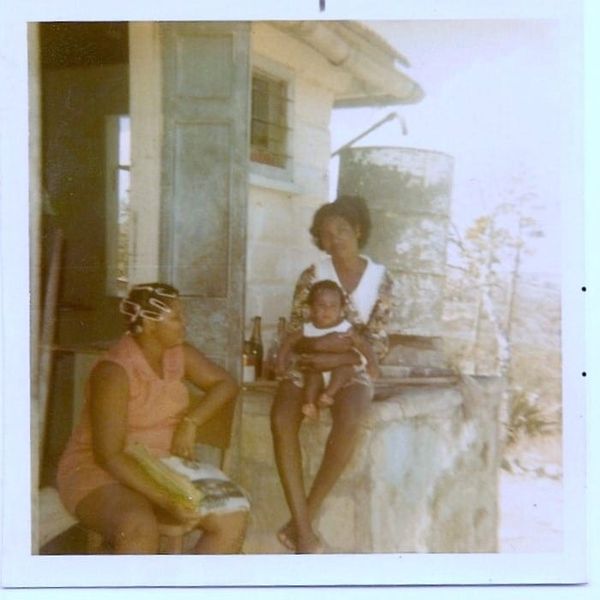
The distribution gap is not a romantic problem. I want to be precise about this because it is easy to aestheticize the idea of lost or hidden films, making it sound like Elliott is just miserable. It is not that. It is a structural failure with real costs. Filmmakers who cannot distribute their work cannot fund their next film. Audiences who cannot access stories from their own cultural heritage lose something they may not be able to name but will feel across a lifetime. The children of the Angolan diaspora in Lisbon, the Martiniquais community in Paris, my Caribbean families in London, Birmingham, and Leicester— they are not a niche. There are millions of people with credit cards and fast internet, and a hunger that the current distribution infrastructure has simply decided is not worth feeding.
I spent years in trade negotiations watching exactly this logic operate in other industries. The infrastructure is built to serve the markets that are easiest to reach and most profitable. Everyone else submits a request and waits. Sometimes the request is eventually granted. Often it isn't, not because the demand doesn't exist, but because the foundation was never laid in that direction, and nobody with the resources to lay them has yet decided it is worth the effort.
The films exist. They are being made right now in Cape Verde, Guadeloupe, Angola, and Jamaica by people who have something to say and the craft to say it. They are completing their festival runs and returning to hard drives and distribution limbo while the infrastructure question remains unanswered.
That question has an answer. It is not even a complicated one. It is an infrastructure question, which means it is, at its core, a question of will.