
What the CAPTCHA Knows
A Dutch short film about failing a robot test won this year's Oscar. Twenty-two minutes. And somewhere in it, I found myself thinking about grief and what we're really asking when we demand that someone never die.

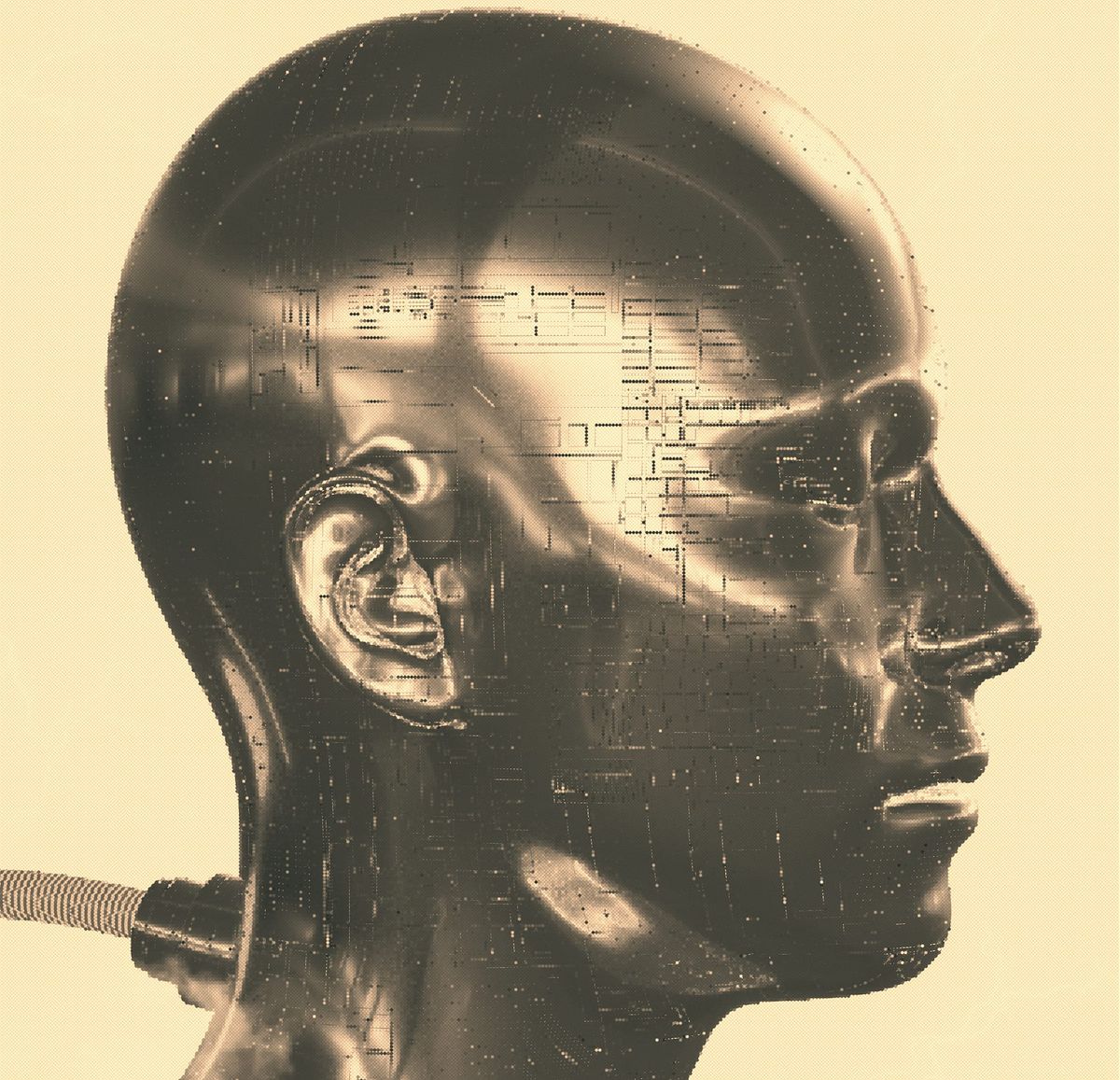
I want to tell you what I thought the film was about before I watched it. I thought, from what someone had told me, or perhaps from a description I had half-read and misremembered, that it was about a woman whose partner had programmed her to die after him. That he had built her, or bought her, or made her in some way dependent on his continued existence, and that the film was about her discovering this. About someone else deciding when you end. About the particular cruelty of loving someone so much that you arrange for them not to outlive you.
That is not what the film is about.
I'm Not a Robot (2023, dir. Victoria Warmerdam) is about Lara, a music producer who fails a CAPTCHA test — one of those "prove you are not a robot" prompts that appear online — and cannot stop failing it. Every time I fail one of those tests, this film pops into my head. "I wonder!" She begins to spiral. Could she actually be a robot? And if she is — what does that mean for her life, her relationships, the person who loves her? It won the Academy Award for Best Live Action Short Film in 2025, becoming the first Dutch short film to do so. It is available free on The New Yorker's YouTube channel. It is twenty-two minutes long and very good.
But I want to tell you about the film I thought I was going to watch, because I think I was thinking about something real. I had just gotten the premise wrong.
The thing I was thinking about is this: what do we do to the people we love when we cannot accept the idea of losing them?
I talk to my grandmother at her gravesite in Bethesda, Antigua. Many people do this. The last time I was there, another guy was there talking to his mother and fixing her gravesite. In both our cases, we accepted that someone we love died, and we have memories we made while they were alive, even to understand how they would react to what we tell them while at their grave.
But this film was about something darker to me. Suppose you cannot accept death, whether it's your own of someone close to you? I hear many people, including family members who love to preach about trusting whatever god they worship, but are terrified of death.
Everybody want to go to up to heaven
But none o them, none o them want to die
— Peter Tosh
I have lived in enough places to know that this is not a universal instinct, this particular way of not letting go. It is a very specific cultural formation. The idea that keeping someone alive, or keeping their memory artificially animated, or refusing to speak plainly about what is coming, is an act of love. In some places I have lived, death is named directly. There are rituals for it that the whole community participates in, that give the dying person a clear and honored place in what is happening. In others, it is circled around, approached obliquely, treated as something that shouldn't be said in front of the person most affected by it. For many Caribbean parents, their children cannot prepare them for death while they are alive because they believe the very act of talking about wills and testaments and like preparation is likely to cause death.
The film I misremembered, the one where someone programs the person they love to die alongside them, is actually a film about the inverse of that. It is a film about someone who decides, out of love, that the person they love should not have to face loss. That is not kindness. It is selfishness, dressed as devotion.
Warmerdam's actual film explores identity, feminism, and AI through the lens of a woman who cannot pass a test designed to confirm she is human. Sounds familiar. Remember the face recognition software that doesn't recognize many women. The comedy of it is dark and very Dutch — precise, dry, slightly surreal. Lead actress Ellen Parren takes Lara through something that has been described as the five stages of grief as she processes the possibility that her entire sense of self is wrong. She does not know who she is, and what the husband and the company that made her is doing with her memory.
What strikes me about this premise, and what connects it, I think, to the film I was imagining, is the question underneath it: what makes you a person? Is it memory? Pain? The ability to lose something? The CAPTCHA test, in Warmerdam's framing, is absurd precisely because it tries to reduce this question to clicking on traffic lights. A robot, a computer, is asking you to prove you are human if you can identify the bus. You are human if you can read the distorted text. But the film knows, and Lara's crisis makes this clear, that none of those tests actually measure what we mean when we say human.
What we mean, I think, is mortal. What we mean is that you can be lost.
In the Caribbean, we have nine-night, the wakes, the rituals of mourning that exist precisely because we acknowledge loss as real and communal. Everyone in the community will try their best to go to every communal funeral. Every politician knows they must attend all funerals in their constituency, if they want to win future elections. Mourning others and our own inevitability are all things we may have to accept, as unpleasant as they make us feel. Were we really meant to feel happy and euphoric all the time? Our other available emotions suggest not.
There is something in the AI conversation that no one seems to want to say plainly, which is that the thing we fear about artificial intelligence is not that it will hurt us but that it will make our deaths meaningless. If a machine can replicate everything we think makes us irreplaceable, our voice, our responses, our appearance, even our way of loving, then what exactly are we mourning when we lose someone? What was the particular, unrepeatable thing? Can't we now upload their personality into an AI that can behave like the one we lost, like one of those Black Mirror episodes?
Warmerdam doesn't answer this. The film doesn't pretend to. What it does instead is stay with Lara in her uncertainty and let us feel what it costs her to not know whether she is the kind of thing that can be lost. That is not a small subject for twenty-two minutes. Packing all that in such a short time took some skill.
The film I misremembered — the one about the person who arranges for someone they love to die alongside them rather than face mourning — that film may not exist. But the feeling behind it does. I have seen people hold on in ways that cost the other person something. I have watched grief delayed become grief compounded. I have been in rooms where no one was willing to say the name of what was happening, and felt how much heavier that made everything.
The CAPTCHA test asks: are you human? The harder question, which the film earns the right to ask by the end, is: do you know how to let go?
I have lost folks, and I cherish their memory. The cost of keeping them alive would have been far worse. Do I want them uploaded somewhere? I don't think so, for now anyway.
I'm Not a Robot (2023) is directed by Victoria Warmerdam. It is free to watch on The New Yorker's YouTube channel. Watch it before you decide what you think it means.
Or watch it here:
 Elliott D. Paige
You might also like this one.


