
The Boy Who Read the Letters
Twenty-nine minutes. No famous names. No marketing budget worth mentioning. And yet The Letter Reader does something most feature films spend two hours trying and failing to do. It makes you feel the weight of a single piece of paper.


I don't often watch short films because I want my story to take time to develop the characters. I want the story to breathe slowly. If it does not hook me in three minutes, I'm out. But this story pulled me in from the beginning, without much words. I think it was the young actor's eyes, turning up the whites at his parents. Mad. I know that childish look. I have likely done it myself. This is the honest account of one of my favorite shorts. The Letter Reader captured me completely. I didn't move. I didn't check my phone. I watched all twenty-nine minutes and then sat with it for a while before I did anything else. Then I watched it again.
That doesn't happen often. It happened here. Well-told story!
The Letter Reader (2019) was directed by Sibusiso Khuzwayo. It tells the story of Siyabonga, a twelve-year-old boy from Johannesburg, sent to live with his grandmother in a village in KwaZulu-Natal while his parents work through their seemingly marital problems at home. The city boy doesn't fit. He doesn't know the rhythms of the village, doesn't understand the pace of it, resists the chores and the silences. He tips over the heavy wheelbarrow of stuff. He hates the work. Then his grandmother puts him to work reading letters for the people in the community. The letters from husbands working in the cities, from children who have moved away, from anyone whose words need a voice to carry them from the page into someone's life. Siyabonga reads. The village listens, each person in private with him. Slowly, something shifts in him and in the village.
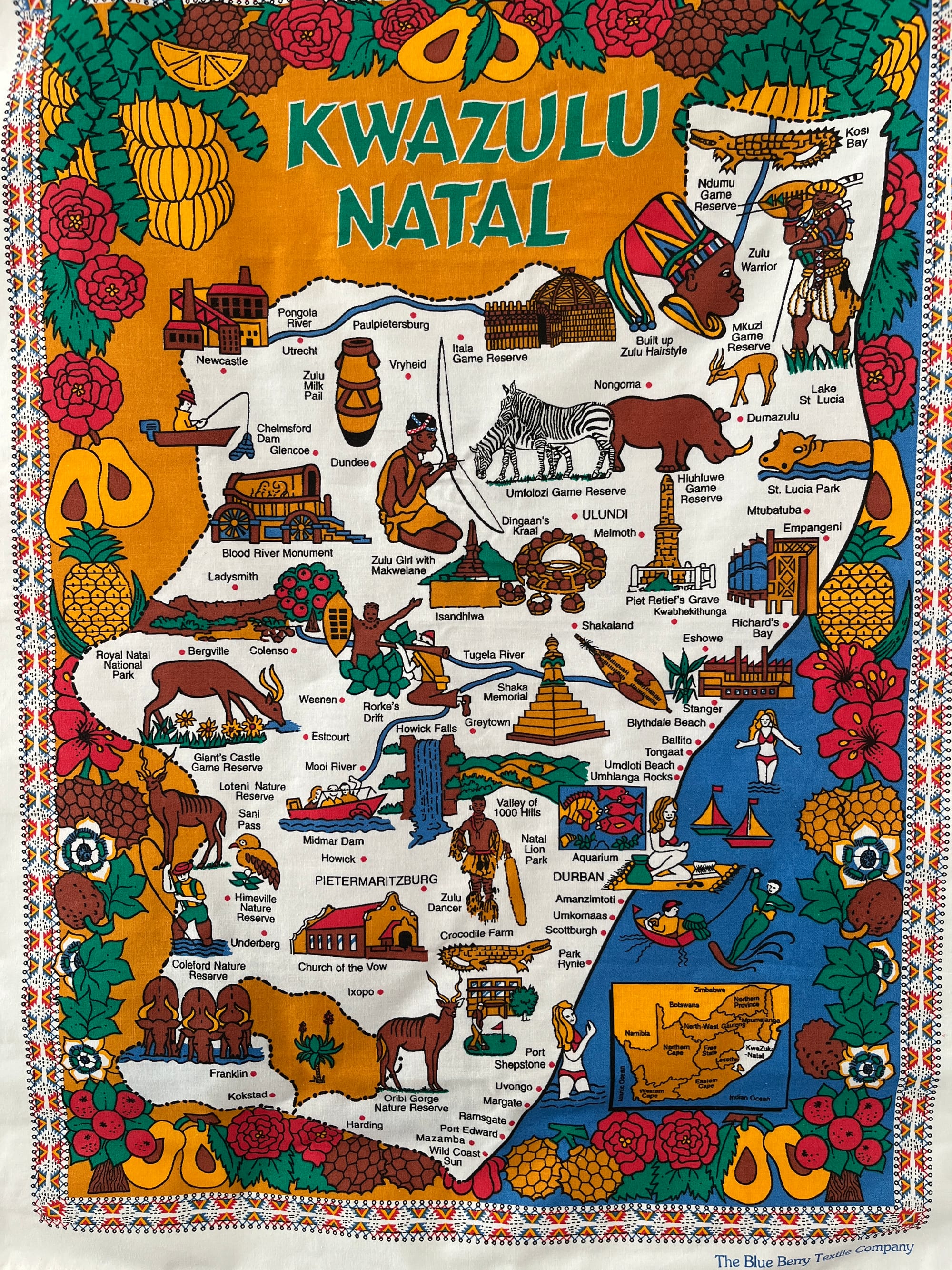
The film won the Shnit Worldwide Short Film Festival Best Short and the Golden Horn Award in 2019, and the Africa Movie Academy Award and the SAFTA for Best Short Film in 2020. It was shot near Bergville in KwaZulu-Natal by Lance Gewer, the director of photography who shot Tsotsi, and it is now streaming on Netflix worldwide. John Kani — South African theatre and film icon, the original Hamlet at the Market Theatre, Black Panther's King T'Chaka — watched it and tweeted that it was "indeed a beautiful film, truly an African story." That is not a small endorsement. Kani does not give those away. elliottdpaige + 2
None of this is why I sat still for twenty-nine minutes. The awards are the credential. The reason I sat still is something else.
I used to read to my grandmother.
Sometimes, we took turns. Mostly, I did all the reading. When we took turns, and she came upon a prohibitively large word, we would workshop it until she got it. She enjoyed that I would push her. She never finished school due to the vagaries of growing up without parents on the small colonial island of Nevis. Back then, the book of trust was the King James Version of the Bible. Even then, I would wonder what the other versions were and why there were even versions. Who benefited from each version? Now, I know!
Reading for someone is a different act from reading to yourself. When you read to yourself, the words land privately just between you and the page. When you read for someone else, you are the intermediary. You are a messenger. The words pass through you on their way to another person, and somewhere in that transit something changes in both of you. You become responsible for the words in a way you weren't before. You become the carrier. Your tone, voice, breath, and own reaction to the words give them life. You are a storyteller.
Siyabonga learns this. The film shows it in the way he changes as the letters accumulate. He becomes happier. He has purpose. His posture shifts when he starts to understand that what he's doing is not a chore. His chest gets higher, as we say in the islands. He is holding something for people. He is the thread between the person who wrote and the person waiting. A twelve-year-old boy, who came to this village as a reluctant guest, has become necessary.
Then a letter arrives that he cannot bring himself to read in the way the others were read.
Siyabonga gets a letter that carries bad news. He changes it while reading to good news, making the listener happy. He literally keeps love alive while it was sure to die. You have to watch it to see what I am talking about.
There is a conversation happening in African cinema right now about what it means to tell African stories from the inside for Africans and the diaspora. I don't mean the ones for export, or filtered through the expectations of international festivals or streaming platforms looking for a particular kind of exoticism, but for the people whose lives the stories actually describe. Khuzwayo has said the film was a spiritual journey, that it required a power bigger than himself to complete. You can feel that in it, the care, the deliberateness, the refusal to explain anything that doesn't need to be explained to an audience that already understands.Wikipedia
The Drakensberg landscape in the film is ethereal. It is argument. Those mountains and that sky and the particular quality of the light in KwaZulu-Natal are doing real work here. I felt calm. They are saying: this place is real, these people are real, what happens here matters, and these people, and their lives matter. South African icon John Kani called it "truly an African story," and what he meant, I think, is that it doesn't perform its Africanness for anyone. It simply is. I love that! Rotten Tomatoes
That's rarer than it should be. And harder to do than it looks.
I think about Siyabonga sometimes when I am in a situation where someone needs me to carry words for them or to them. I may have to translate, to explain, to deliver something difficult, to find the right form for a feeling that the other person cannot quite reach on their own. I may be offering a word of solace or advice to a family member or friend. Those moments reading heavy chapters of whatever Old Testament book to my grandmother were something special. It is a particular kind of service, a way we connected. Reading to someone means you are present. Then, you leave them alone to let the words arrive at their destination, their core.
My grandmother needed someone to carry words for her, to take a message, albeit between us. I was young, and I did not fully understand what I was doing. I understand it better now that I am older and thinking about it while I write this post. Hmm!
Would it have been any different if I had understood the bond I was creating with another human, like my maternal grandmother? These women of ole were strong. I very much enjoyed the act of reading to my grandmother, and later to my children. That experience helped craft who I am today. This all occurred to me just now! Crazy!
The Letter Reader (2019) is directed by Sibusiso Khuzwayo and is streaming now on Netflix worldwide. It is twenty-nine minutes long. I guarantee you will not check your phone.
If you liked this post, you may also enjoy this one.


