
Eight Cities, Three Continents, Fifty-Three Countries
I have lived in eight places across the Caribbean, the Americas, and Europe. I have visited 53 countries, about a quarter of the world. Each move was deliberate, and each one eventually returned me to the same question I started asking in Antigua: what do you carry, and what do you leave behind?
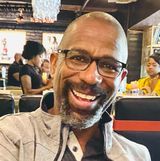
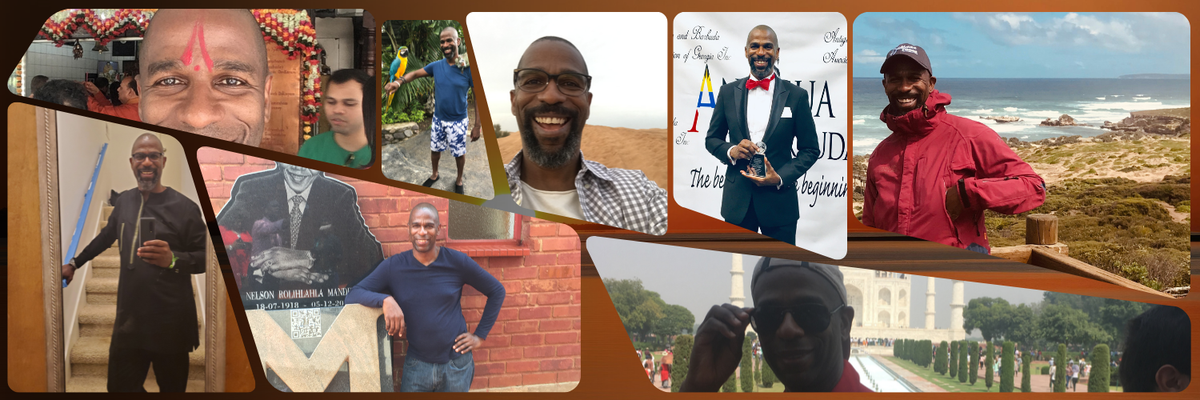
I grew up in Antigua. This is where it starts. A small Eastern village called Christian Hill is my foundation. Antigua is a small island, roughly 280 square kilometers (108 square miles), with a coastline so varied that you are never more than a few miles from water in one form or another. We boast of 365 beaches, one for each day of the year. I grew up understanding that the sea was not a barrier. It was a road. People, like my family, left. People came back changed. People sent money and news, and some eventually came home to be buried. This was the basic grammar of Caribbean life, and I absorbed it long before I had a name for it.
Where I live now in Lisbon reminds me of Willoughby Bay, the sea cove view I had from my backyard growing up. That's where I swam, caught fish, played with friends and family, and enjoyed what I now realize was a peaceful youthful life.
The first crossing was to Barbados, for a Bachelor's degree in Economics and Management. Barbados and Antigua are separated by a few hundred miles of Caribbean Sea and a considerable amount of cultural familiarity — both Anglophone, both island, both shaped by the same colonial and post-colonial patterns. In that sense, it was not a foreign country. But it was the first time I was formally asked to think about how economies work, how development happens, and why some places accumulate wealth while others export their people instead of their products and services. Those questions have not left me since.
Santo Domingo came next, for a Master's degree in Economic Development (Maestria en Economia y Politicas Para el Desarrollo), and Santo Domingo was something else entirely. Two years in the Dominican Republic, or "Santo" as one of my classmates called it, immersed in a Spanish-speaking, Latin American city that had a different relationship to its own Caribbean-ness than anything I had grown up with. I learned Dominicano -Spanish there from the classroom, as well as the streets since it was the only option to communicate. I also fell entirely in love with Latin music, which is a love that has stayed with me across every city since, and which anyone who has spent time with me can confirm. Santo Domingo gave me the Caribbean from the outside of my own experience of it, which turned out to be an education in itself.
Back in Antigua, I re-joined the government — the Ministry of Trade, then Foreign Affairs, working as a Senior Economist on trade policy. This is where the work became real in the way that academic formation can never quite prepare you for. Regional trade policy, multilateral negotiations, the long and frequently frustrating process of small, vulnerable island states trying to make their interests legible to frameworks designed by and for larger economies. Antigua and Barbuda is not a large economy. It is, however, a sovereign state with a seat at the table, and I spent years helping to make the case for what that seat was worth. As I always said in plenary meetings, "We may be small, but we deserve the same benefits as the rest. We are just as human as everyone else!"
That work led, eventually, to Geneva — to head the Organization of Eastern Caribbean States (OECS) Technical Mission, an development officer in the World Trade Organization and a trade promotion expert with the International Trade Centre, where the same arguments I had been making from Antigua were now made in a multilateral register, in rooms where the stakes were correspondingly higher and the pace of progress correspondingly slower. What Geneva gave me, beyond the professional formation, was a particular understanding of how the movement of goods and the movement of people follow the same underlying logic. Borders are political constructs applied to phenomena that are essentially ungovernable. You can regulate what crosses. You cannot stop the crossing itself. I spent years negotiating for fair trade for the people I represented, but it was after I left Geneva that I really understood why there was never truly fair trade.
Barbados appeared again, briefly, before Atlanta — a Caribbean trade promotion project that connected the Anglophone island world to the hemisphere's wider commercial networks. Then Atlanta, which was a pivot of a different kind. Senior corporate business development in aviation, at Hartsfield-Jackson Atlanta International Airport — the busiest airport on earth by passenger count. The work was global in scope, travel-adjacent in its constant preoccupations, and a long way from the small island trade policy offices where my career had started.
What aviation gave me, beyond the obvious professional formation, was a granular education in how places understand themselves through their infrastructure. As I often told my team, an airport is not just a transit point. It is an argument a city makes about its ambitions. What routes it considers worth serving, which passengers it imagines arriving, what countries are worth trading goods with, what it believes about its own importance in the world. Hartsfield-Jackson makes a very particular argument. You learn something about American scale and confidence from standing in that terminal for long enough.
Atlanta airport was a return to aviation. I spent time with LIAT (1974) Ltd airlines in logistics and customer service for cargo and courier service. Those skills, coupled with my trade policy experience proved useful in my corporate role in Atlanta, because I had seen the system inside out.
Lisbon was the first move I made for reasons that were not primarily professional. Thirty years of moving for work had given me a framework for relocation that was essentially transactional: the opportunity presented itself, the calculation was made, the boxes were packed. I sold my stuff in Atlanta. Lisbon was different. I came here because I wanted to slow down enough to see the world and live. Because the light here operates differently from any other light I have encountered, and I needed to find out why that mattered to me. I had visited here a few times before and liked the vibe. I may explore other places, but for now, I am here.
I wrote about that particular transition in an essay called "The Light Here Is Different," which is the most honest account I have of what it means to choose a place rather than be assigned to it. What I didn't write there — because it would have been a different essay — is what the eight cities and fifty-three countries add up to when you try to see them whole.
They add up to this: a person who has spent his adult life at the intersection of movement and belonging. (Actually, I have been traveling since I was six years old - but never mind). Aviation is about movement. Trade policy is about the rules of movement. The Caribbean diaspora, the Anglophone islands, the Spanish-speaking ones, all the versions of the same basic story, are about the cost of movement. What it takes out of you, what it gives back, what never quite makes it across. And Smadi, the streaming platform I co-founded, is about the stories that travel with people across all of it — the films and voices of diaspora communities, people that look like me, who have been moving for generations and whose cultural production has not been nearly as portable as they have.
People move for better, or to escape, or because others have taken all their resources away to somewhere else. They still crave their culture to be seen in a positive light, or at least truthfully with all the complexities within us as humans.
I have also written about Portugal in a more practical register — Embrace Portugal: Your Complete Relocation Guide & Workbook, published in 2024, is the resource I wished had existed when I was making the decision myself. It comes from the same source as this site: a recognition that the information people need when they are making a crossing rarely exists in the form they need it.
Eight cities. Three continents. Fifty-three countries and counting. Several careers that look, from the outside, more varied than they feel from the inside because from the inside they have always been versions of the same preoccupation.
Who moves? On what terms? What do they carry? What does the place they arrive in do with them and to them? What are their stories?
This site is where I work through those questions in the form that suits them best, which is the essay. Not the policy paper, not the pitch deck, not the guide. The essay — where you follow a thought until it tells you something true, and then you stop.
My mother always said to "be the best you can be at whatever you set your heart on doing." She passed away in 1993, and I am far older than she was then. I am grateful for her words, and for life. I will continue to share my viewpoints on the world as I have in all my careers and on any platform I am on. Here will be no different. Come along for the ride.
 Elliott D. Paige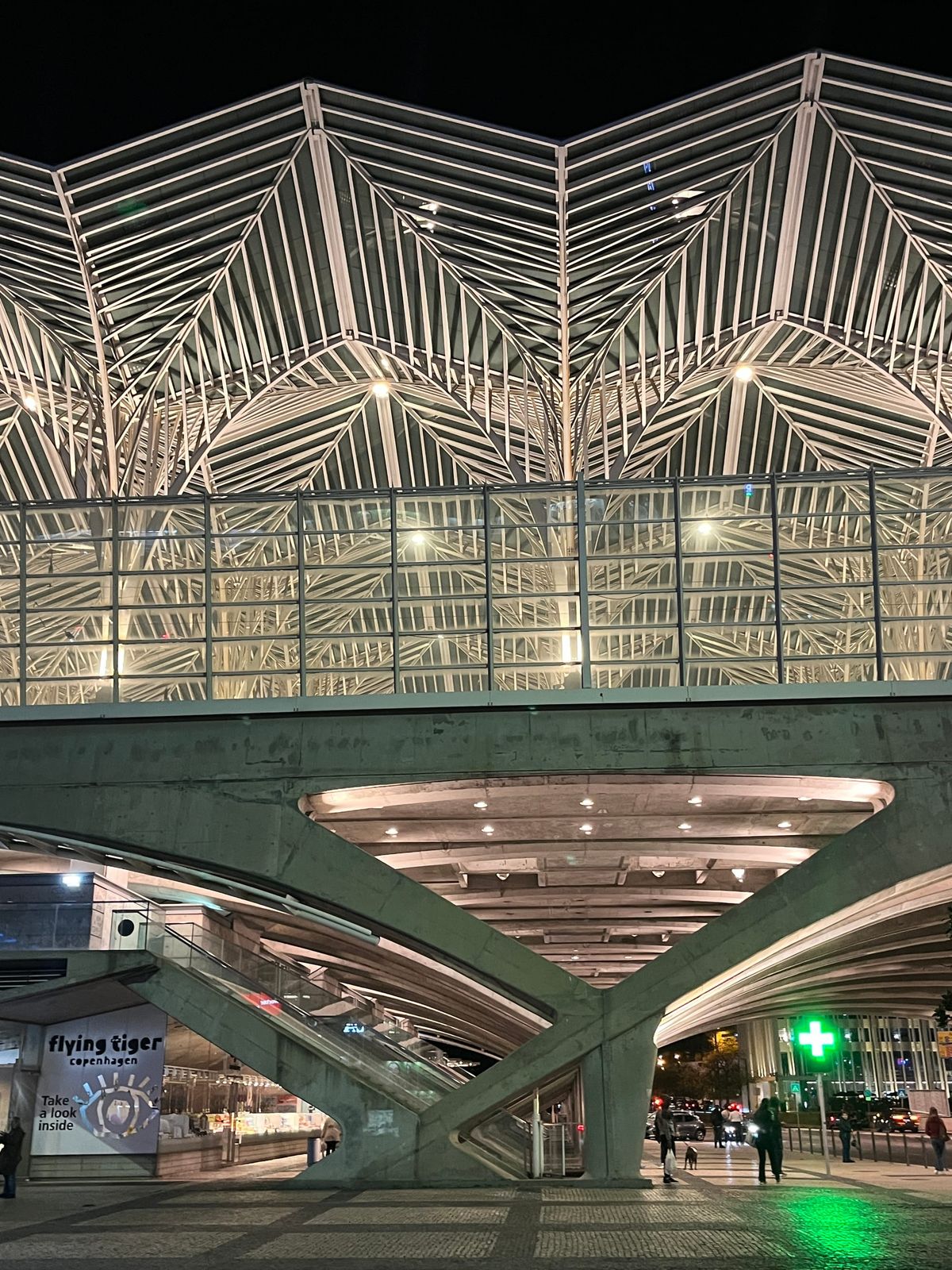
 Elliott D. Paige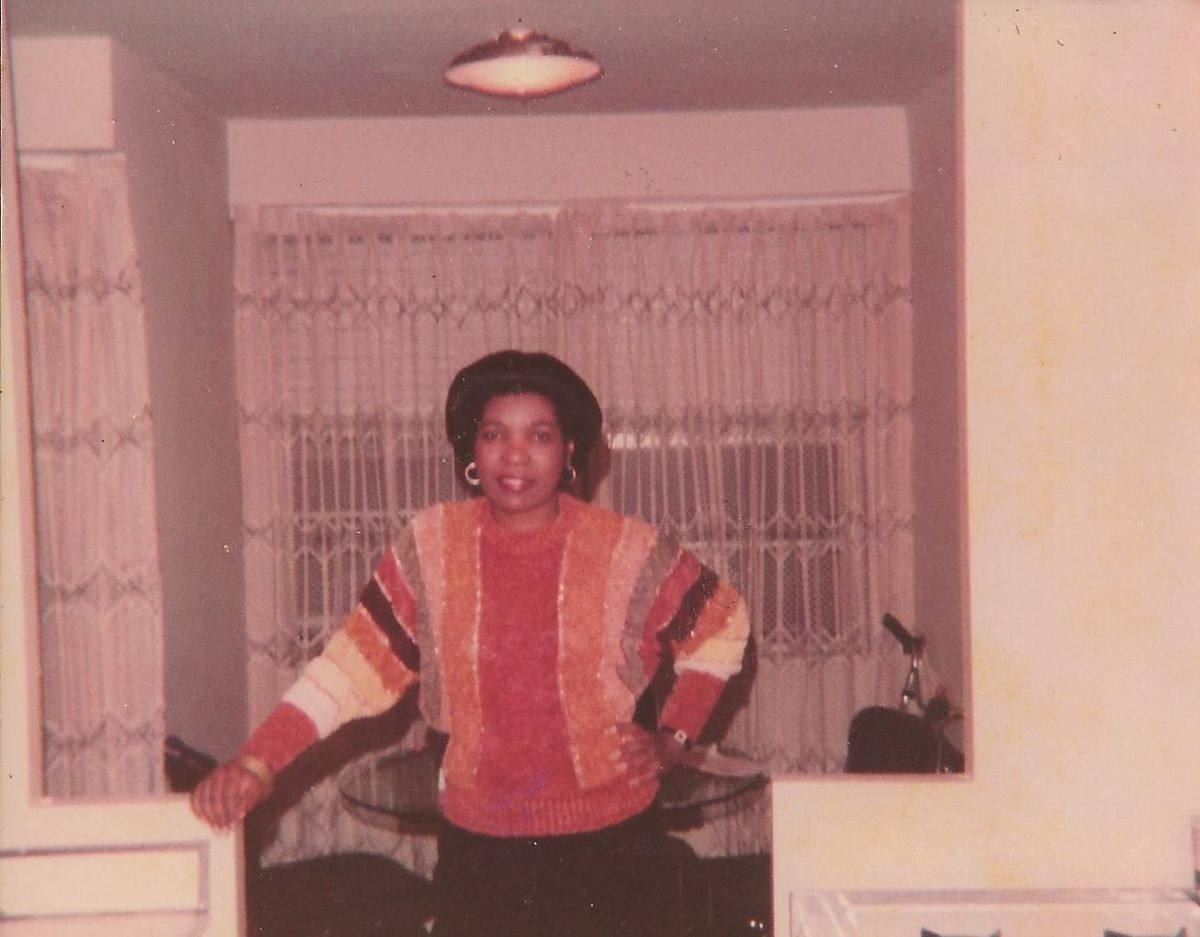
 Follow


